Theaterkunst Talk
Sabrina Krämer
This year’s German Film Award in the category of “Best Costume Design” goes to… Sabrina Krämer for “Soun of Falling”! We offer our warmest congratulations on winning the LOLA. She was also awarded the European Film Award for “European Costume Designer” earlier this year.
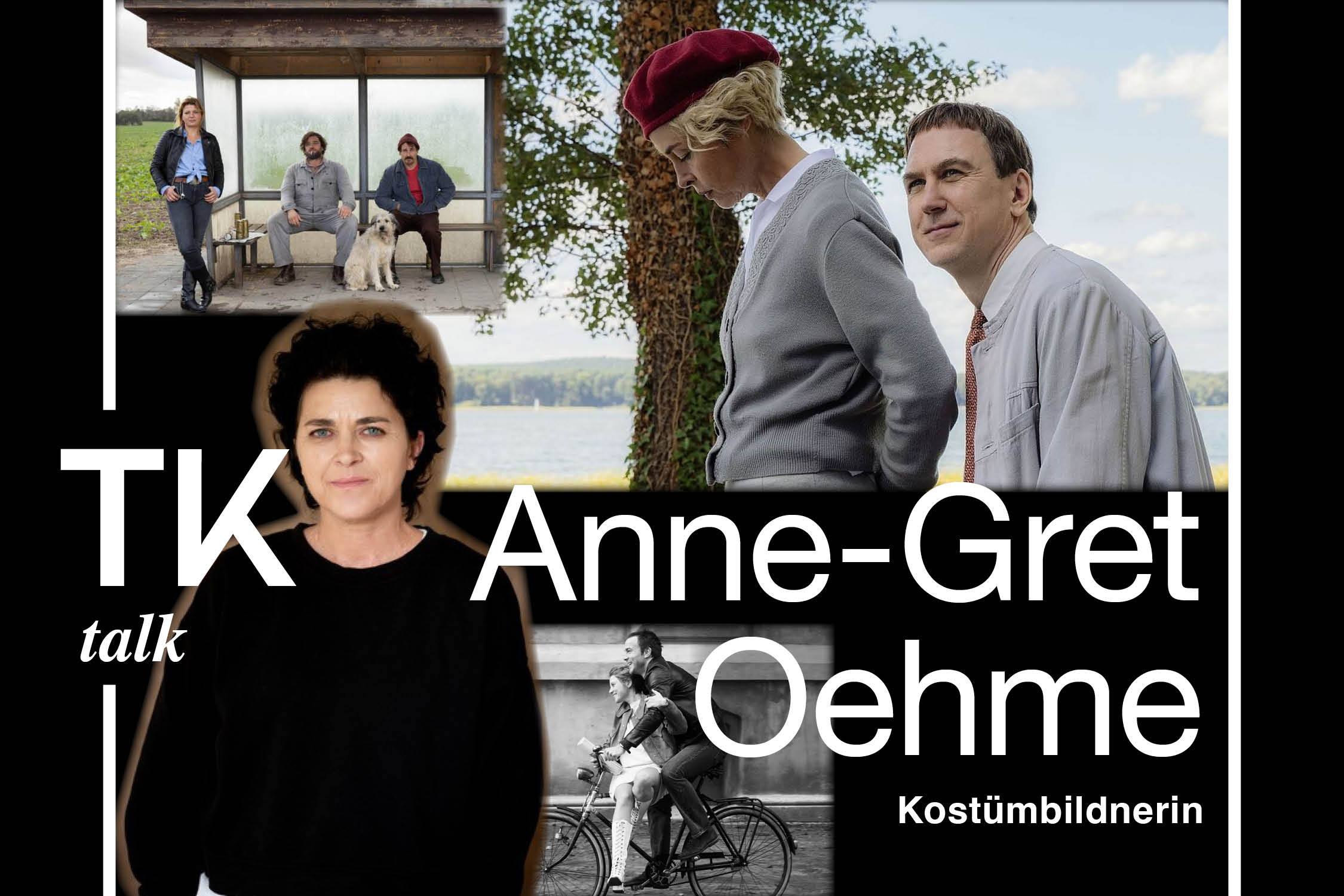
Costume designer Sabrina Krämer graduated in fashion design from Burg Giebichenstein University of Art and Design in Halle and has since worked first as a costume assistant and set dresser, and subsequently as a costume designer on various film, TV series and theatre productions, such as “Fabian oder der Gang vor die Hunde”, “Er ist wieder da”, “In den Gängen”, “Tschick”, at theatres in Leipzig, Halle and Koblenz, as well as on music videos for the “Beatsteaks” and various adverts.
“Sound of Falling” tells the story of four women from different eras – Alma (1910s), Erika (1940s), Angelika (1980s) and Lenka (2020s) – whose lives are eerily intertwined. Each of them spends their childhood or youth on a four-sided farmstead, yet as they wander through their own present, traces of the past are revealed to them.
With great artistic precision and a keen sense of four distinct time periods, varied atmospheres and a host of characters, Sabrina Krämer has played a decisive role in shaping the visual world of the film, which won awards in a total of ten categories.

Copyright Portrait: Deutscher Filmpreis 2026 / Eventpress // Studio Zentral (u0022In die Sonne schauen) // Zorro Film (u0022In den Gängenu0022) // Lupa Film GmbH (u0022Fabian oder Der Gang vor die Hundeu0022)
Theaterkunst
Sabrina Krämer
Wow! The LOLA! What were your first thoughts when you heard your name announced at this year’s film awards ceremony?
At that moment, I felt above all a sense of joy and gratitude. An award like the Lola is, of course, a great personal honour, but I see it first and foremost as a recognition of a collective artistic achievement. Costume design always involves a balance of research, creativity, craftsmanship and collaboration with many other disciplines. The fact that this work is recognised and valued moved me deeply.
The costumes in “Sound of Falling” span four different decades. How did you approach this project?
In addition to the differences typical of each period, it was important to us to create visual links between the women and their respective worlds. To achieve this, we worked with recurring elements – in particular aprons, shoes and various types of headwear. These garments appear in all time periods, but vary in material, cut and function according to the era in question.
I was interested in how certain styles of clothing can endure across generations. An apron, for example, has come to symbolise different aspects of work, everyday life, caregiving or social roles over the decades, yet it remains a recognisable motif.
This gave rise to visual threads linking the four women together. The costumes were not intended to suggest that their lives are the same, but rather to show how experiences, traditions and memories are passed down through the generations. For us, these recurring elements became a kind of silent bond between the generations.
How did you get into costume design, and what are your hopes for your profession and your colleagues?
I got into costume design because I’ve always been interested in how characters can be portrayed through their appearance. Clothing is something very ordinary, yet at the same time it embodies memories, social affiliations, desires and life stories. To this day, I remain fascinated by the fact that costume design operates at the intersection of artistic creation, research, psychology and craftsmanship.
Above all, I would like to see greater visibility and recognition for the many people involved in our profession. Costume design involves not only drafting and creating designs, but also an enormous amount of craftsmanship and organisational work, much of which takes place behind the scenes. Without the expertise and dedication of our colleagues in the workshops, the costume houses, the wardrobes and on set, our work would not be possible.
Furthermore, I hope to have the time and resources needed to do a good job. Costume design can make a significant contribution to storytelling. The earlier and more closely it is integrated into the creative process, the greater its impact will be. And, of course, I hope that the next generation of costume designers will also find the right conditions to carry on this versatile and wonderful craft.
What advice would you give to those starting out in costume design?
I would advise those starting out in their careers to stay curious and gain as wide a range of experiences as possible. Costume design isn’t just about drawing; it also involves observation, research, an understanding of craftsmanship, and an interest in people. You often learn just as much in the workshop, in the wardrobe department, or whilst assisting with costumes on set as you do at the drawing board.
I also believe it is important to seek collaboration with other departments. Good costumes are rarely created in isolation, but rather through dialogue with the director, set design, make-up, cinematography and, of course, the actors. The better you understand the perspectives of others, the stronger your own work becomes.
And finally, I would encourage you to trust your own judgement. Trends come and go, but a keen eye for detail, an instinct for characters and a love of storytelling remain the most important foundations of our profession. These are skills that you develop over many years and which help you develop your own distinctive style.
Thank you very much to you and your Lola for taking the time to do this interview. See you soon at Theaterkunst!
Thank you and see you soon!