Theaterkunst Talk
Judith Holste
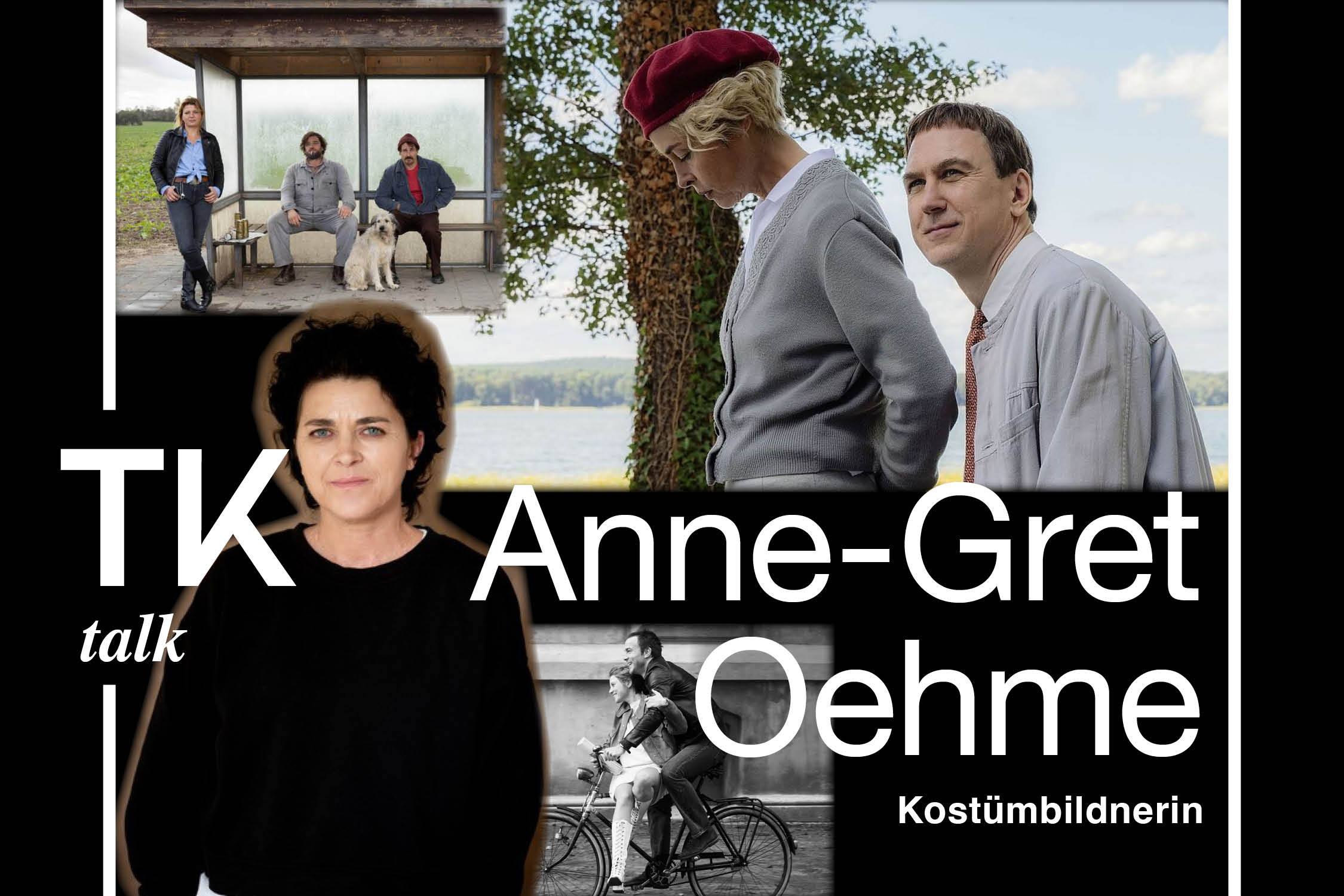
We talk to costume designer Judith Holste about her work on the fourth season of “Ku’damm” and 1970s fashion. After completing an apprenticeship as a dressmaker and a semester-long course in pattern cutting, she studied costume design at HAW Hamburg in Armgartstraße. While still a student, she gained work experience in the costume department at the theater in Düsseldorf and worked as an assistant at the Burgtheater in Vienna with George Tabori and Andrea Breth.
Judith Holste’s work is known from “Der Fall Marianne Voss” , “Die Unschärferelation der Liebe”, “Wir wollten aufs Meer”, “Erzgebirgskrimi”, and “Wolffs Revier”, among others. She moved to Berlin in 1994 for the latter series and has remained loyal to the city to this day.
Ku’damm 77 will premiere on December 27, 2025, in the ZDF media library and on January 12, 13, and 14, 2026, on TV. Following the great success of the first three seasons centered around the Schöllack family, the family story now continues at the Galant dance school on Kurfürstendamm. Things are turbulent in the apartment above the dance school, where three generations live together: sisters Monika (Sonja Gerhardt) and Helga (Maria Ehrich), their almost adult daughters Dorli (Carlotta Bähre) and Friederike (Marie Louise Albertine Becker), and mother and grandmother Caterina (Claudia Michelsen). Only Eva (Emilia Schüle), the third sister, is still “abroad,” as her prison stay is euphemistically described, but her release is approaching.

Copyright: ZDF/Conny Klein (u0022Ku’damm 77), X Verleih (u0022Die Unschärferelation der Liebeu0022), Wildbunch (u0022Wir wollten aufs Meeru0022) // Portrait: privat
Theaterkunst
Judith Holste
What were your first thoughts when you were asked to work for the fourth season of “Ku’damm”? Were you attracted by the theme of the 70s? In terms of fashion, the previous seasons dealt with the 50s and 60s.
I was absolutely thrilled when I got the go-ahead for the project and went to the Kant cinema that very same day, because they were showing the 1977 film “Saturday Night Fever” starring John Travolta. That really got me in the mood for the topic.
What research did you do on 1970s fashion? Can you name a particularly influential source?
First, I looked through my own photos, because the 70s were my time. I even went to dance school myself in 1977. What a nice coincidence. To refresh my memory, I looked at my own class photos from that time. I also found a lot of inspiration in old Burda magazines, which you also have well sorted and ready to hand at Theaterkunst. The same goes for Bravo and Stern magazines. In addition to these many static images, I also needed moving images for my research. RBB has a great documentary about Berlin in 1977. I watched it several times to get a feel for Berlin at that time. I also drew inspiration from “Drei Damen vom Grill” and the legendary Tatort episode “Reifezeugnis” starring Nastassja Kinski.
How did you approach the fashion of 1977 without falling into stereotypes?
During my research, I quickly realized that the end of the 70s was no longer as bright and colorful, but rather more subdued in terms of color. Nevertheless, you can play with the entire spectrum of the 70s, because this allows you to reveal a lot about a character, e.g., whether the person is very fashionable or tends to cling to the old ways.
We were able to portray the different groups in the series very well through fashion. The guests at the dance school were dressed very differently from the club or pub goers, for example. It always depends on who the characters are and what they express. I wanted to show the different trends that existed at that time. In Berlin at the end of the 1970s, for example, there were a few punks on the streets, so we made sure they were visible in the cityscape.
I used a lot of original costumes from Theaterkunst, especially the SWR plays in Naumannpark. This collection of 1970s costumes was extremely important for the production. I was thrilled when, on the very first day of my preparation period, I found the great plaid ensemble at your place, which Eva ultimately wears for her big appearance in the series.
It was a big challenge to estimate the right sizes, because the sizes back then are completely different from today’s sizes. My team and I measured everything or simply tried things on ourselves.
We only made Dorli’s jumpsuit because we needed several of them for the dance doubles. We also made a competition dress, which we needed two of. Otherwise, we used original pieces from the period. There were plenty of those, because every time you go through the costume collection, you find new things.
How do the looks of the three generations differ, and how do the costumes reflect the personalities and changes of the characters (grandmother Caterina, her daughters, their daughters)?
I rewatched all the episodes and seasons to understand how everyone relates to each other and what happened in the past.
Caterina is designed to be less fashionable and more retro, with her own unique style. This meant that she could wear anything, such as an orange jersey suit from the early 70s. It was a very lived-in look.
The costumes were an excellent way to support each character and their development. From Eva in prison and her prison attire to her fantastic costume after her release—there’s a whole story to tell there. Monika, who trains her daughter Dorli, is more practical and usually wears pants, so I picked up on that.
Or Helga, who breaks free from her existence as a wallflower after meeting this new man. These are wonderful developments.
The actors were very open to our costume suggestions and accepted everything. The costume must not be too dominant. The focus must always remain on the role, because the costume supports the character.
How did you get into costume design and what excites you about your job?
I got into costume design through my tailoring education and internships at the theater. I quickly realized that I was more interested in costumes and working with people than in fashion itself.
I love that every production brings a fresh theme and that you always have to adapt to the people involved. I find the appeal of creating new characters for each production fascinating. When reading the script, I always get initial ideas about what a character might look like and whether there might be a special feature that could be highlighted with a costume detail. No one is perfectly dressed, and that’s how it should be in the film when you create a character. My team and I always remain open to what the actor has in mind.
At Ku’damm in the 70s, the change in actors was very noticeable: they often arrived in fleece jackets and sweatpants and left for the set in tight bell-bottoms, plaid shirts, and colorful glasses.
What advice would you give to young people who would like to work in costume design?
Above all, you should enjoy your job and find it fulfilling. Patience and diplomacy are very important, because the ideas of different people (costume designers, actors, directors, etc.) need to fit together. You have to be prepared for many different opinions to clash and for your ideas to remain flexible.
A certain degree of composure is also helpful. You should stick to your ideas, but not be rigid about them; instead, always remain open to other influences. Nevertheless, you can and must trust that your own ideas are a good foundation.
Thank you very much for the interview, and see you soon at Theaterkunst!
See you soon!