Theaterkunst Talk
Anne-Gret Oehme
Potsdam-based costume designer Anne-Gret Oehme grew up with film: her father, Roland Oehme, was a director and screenwriter at DEFA. While studying costume design at the Dresden Academy of Fine Arts and at DEFA’s in-house training academy, she also completed an apprenticeship as a bespoke men’s tailor. After working for some time as a costume supervisor, she established herself as a costume designer after the fall of the Berlin Wall.
Her credits include “Tote sterben niemals aus”, “Die Stille nach dem Schuss”, “Du bist nicht allein”, “Warten auf’n Bus”, “Zwei zu eins” and “Der Held vom Bahnhof Friedrichstraße”. In 2022, she received the German Film Award for Best Costume Design for her work on “Lieber Thomas”.
For her two current productions, “Tania” and “Heimsuchung – Eine Jahrhundertgeschichte”, Anne-Gret Oehme once again worked with Theaterkunst.
In Volker Schlöndorff’s “Heimsuchung – Eine Jahrhundertgeschichte” (cinema release: 15 October 2026), a house on a lake in Brandenburg becomes a mirror of an entire century of German history. From the Weimar Republic through the Third Reich, the war, the GDR and reunification, the film follows the fates of its residents in their search for home and belonging.
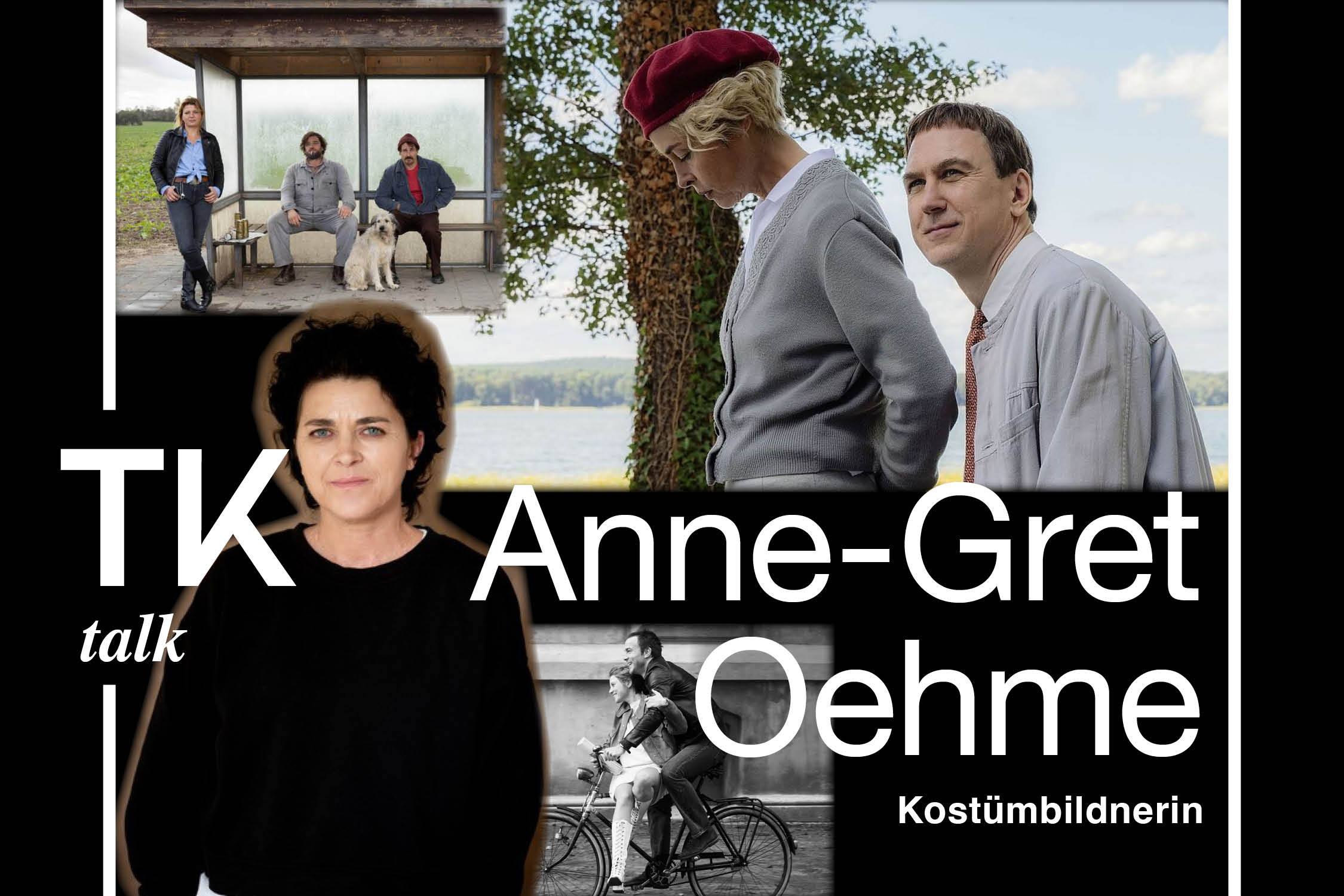
Copright Portrait: Peter Hartwig // Heimsuchung: STUDIOCANAL / Ziegler Film // Warten auf’n Bus: ARD //rnLieber Thomas: Zeitsprung Pictures / Wild Bunch Germany
Theaterkunst
Anne-Gret Oehme
With “Heimsuchung – Eine Jahrhundertgeschichte”, you developed the costume design for a film that spans several eras of the 20th century. How do you approach, as a costume designer, a story in which fashion, society and ways of life change so dramatically?
Extensive and precise research is a good foundation for any historical project. Even though I learned a great deal about costume history during my studies, when preparing a film it’s essential to immerse yourself deeply in each particular era.
Much of my work is based on historical photographs, ideally from private collections. Fashion magazines can help, but they’re not my main focus, because it isn’t fashion that determines my costume design – it’s the different characters and the way they move through space. Film is a collaboration between all departments; together we create images and characters that have to feel right. When all the elements come together, unforgettable stories emerge.
For the 1930s to the 1950s, it was harder to find meaningful material. People didn’t take as many photographs back then, and the eyewitnesses of that time are passing away. The 1960s to the 1990s were easier – I even have my own photos and memories from those years. For me, it’s essential to get a feel for an era, and films help me with that too – not only films about the period, but also films from it.
Which costume pieces kept reappearing from the time before the Second World War through to the fall of the Wall, accompanying the characters throughout the film?
The house on the lake is at the heart of the story. Naturally, people go swimming in every era. It took many hours of research to find out when which swimwear was worn by whom – and then to actually find it. Beautiful old swimming caps had lost their plasticisers and fell apart before they ever made it into the film. I was afraid I wouldn’t be able to use some particularly beautiful swimsuit treasures from your collection, because women were smaller back then. But I was lucky, and for me one of the most beautiful scenes in the film is when Susanne swims and swims and swims…
You grew up in Babelsberg and began your career at DEFA. What fascinated you about costume, and which experiences from that time are still with you today?
If you didn’t want to look like everyone else in the East, you had to be creative. So I started designing and sewing my own clothes very early on – I even made shoes. My fascination with film came from home. During the school holidays I was sometimes allowed to join my father on set, and all of my parents’ friends worked in film. And so one thing led to another.
I started at DEFA straight after finishing school. Before becoming a wardrobe assistant, I spent a few weeks in the costume store. Costume treasures were kept in partly dilapidated barracks – it was dreadful and fascinating at the same time. For each role, I strive for a timeless costume, and I like to mix costume pieces from different eras, for which a costume collection is indispensable. Making a lot out of a little, again and again, always brings new challenges, drives me and means my job is never boring.
What advice would you like to give to young costume designers?
Be open and curious. “There’s no such thing as impossible.” Small budgets demand creativity and you grow with the challenges you take on – but don’t let anyone push you around. Costume matters, because: NAKED WITHOUT COSTUME!
Thank you very much for the interview and see you soon at Theaterkunst!
Thank you!