Theaterkunst Talk
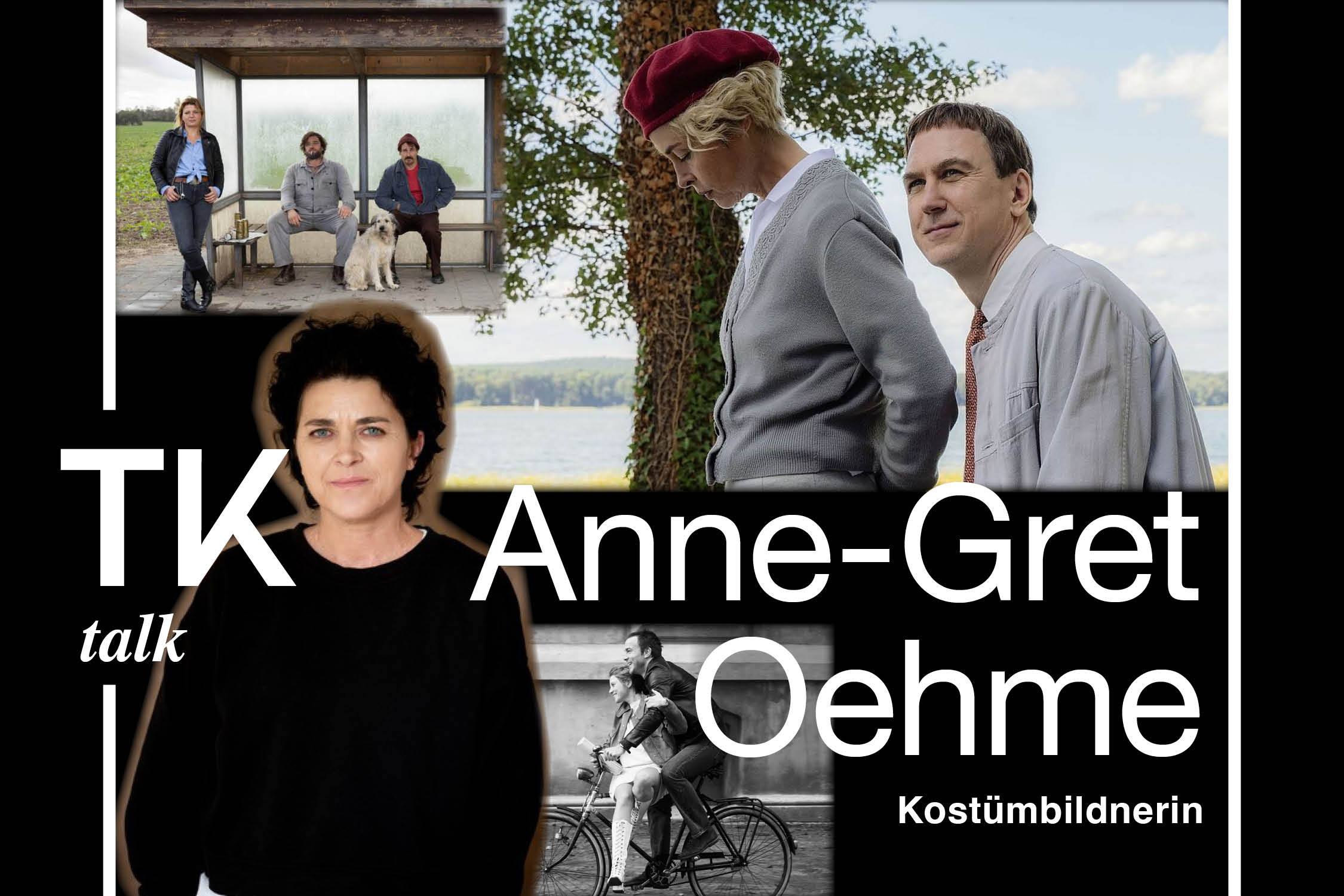
Esther Walz
Esther Walz began sewing as a teenager and trained at the Academy of Jewellery Art in New York. She went on to complete a degree in costume design at Parsons School of Design in New York. Since 1980, she has been working in costume design for television films and cinema productions, as well as for theatres, focusing on historical, futuristic and contemporary themes.
Her recent productions include, for example „The Weight“, „Der perfekte Urlaub“, „Die Affäre Cum-Ex“, „Barbaren“ und „Chantal im Märchenland. In 2016, Esther Walz won the German Film Award for ‘Best Costume Design’ for „Der Staat gegen Fritz Bauer“. She had previously been nominated five times for various films.
“Virginia Woolf’s Night and Day” is based on the author’s novel of the same name, published in 1919. In London, Katherina (Haley Bennett) prefers to pursue her academic ambitions rather than rush into marriage. When she then meets the suffragist Mary (Lily Allen), she is drawn into the world of social self-determination. Her heart beats for astronomy and, suddenly, also for the progressive-minded lawyer Ralph (Elyas M’Barek).

Copright Portrait: Niko Karo // Woolf Comedy Productions Ltd. („Virginia Woolf’s Night and Day”) // Fields Entertainment / Augenschein Filmproduktion (“The Weight”) // zero one film (“Der Staat gegen Fritz besser“)
Theaterkunst
Esther Walz
With „Virginia Woolf’s Night and Day“ we are transported back to London in 1910. What makes this production and the costume design so special?
The aim of the Iranian director Tina Gahravi and myself was to portray the period around 1910 authentically, whilst avoiding the look of a dusty period piece. Bringing a touch of freshness to a historical costume drama, without adapting the costumes to our modern viewing habits and without distorting the period, is a task that should not be underestimated.
How do the costumes in the film highlight the themes of female self-determination and social change?
We join the lead actress as she enters the world of the suffragettes, whose style of dress – and, of course, their political views – stand in stark contrast to the middle-class world of London. We see how Katherine changes not only herself but also her clothing the more she breaks away from her conservative father’s world.
When adapting books for the screen, do you also take your cue from the original work and look there for inspiration for your costume design?
Of course, you read and characters take shape in your mind. Then the actual research begins, but interestingly, I usually end up with characters that have already formed intuitively in my mind.
In this case, the screenwriter had strayed somewhat from the source material, and as it is a relatively autobiographical book, I initially based my interpretation more on Virginia Woolf herself. Her delicate blouses and her earrings can be seen on our Katherine.
A batiste blouse that she wears later in the film has a small butterfly at the neckline – found at Theaterkunst, by the way – which is a subtle reference to her butterfly-like nature.
How did you get into costume design, and what do you particularly appreciate about your job?
More or less by chance, through my older sister’s friends, who lived in a shared flat with film school graduates when I was a teenager. As I did a lot of sewing, Peter F. Bringmann recognised my talent and offered me my first job as a wardrobe assistant on his debut feature film, “Theo gegen den Rest der Welt” (1980). A few years later, I met Dominik Graf and had the chance to work on a few projects with him. After being spotted by Bernd Eichinger, I landed a job as an assistant on “The Name of the Rose”. From there, I moved on to work with Wim Wenders, and that’s how it all fell into place.
I love the variety of the projects, having such a creative job, and the interesting themes that constantly require me to immerse myself in the story.
Thank you very much for the interview, and see you soon at Theaterkunst!
I would like to add that, for the most part, my team and I sourced and had the costumes made in England; however, I found some very exquisite costumes for the two female lead roles at Theaterkunst, which I simply couldn’t do without. Thank you for the interview!