Theaterkunst Talk
Gabriela Reumer
Costume designer Gabriela Reumer once again gives us a glimpse into her work on “The Empress”. When the series premiered on Netflix in 2022, people weren’t only talking about Elisabeth and Franz Joseph, but also about the costumes. Gabriela Reumer did not recreate 19th-century Vienna as a museum piece. She combined historical accuracy with a modern visual language, and the wardrobe tells the story of a young woman rebelling against the confines of the court. For this, she received the German Television Award in 2023 and an Emmy nomination.
Born in Locarno in the canton of Ticino, she lives and works in Berlin. For many years, she has shaped the costume design of German film and television productions, including „Keinohrhasen“, „Der Geschmack von Apfelkernen“, „Kokowääh 2“, „Maxton Hall“ und „Dreamfactory“.
We have taken over a large part of the costumes from “The Empress” into our collection: dresses, skirts, blouses, shoes, hats, masks, crinolines and corsets are available for hire in our historical costume hall. Even the opulent wedding dress from Season 1 is among them.
On November 12, 2026, the gates of Schönbrunn Palace open on Netflix one last time: the third and final season of “The Empress” shows Elisabeth fighting for her heart, her health and her voice. Constrained by the corset of the Viennese court and deeply hurt by Franz’s rejection and infidelity after his return from the war, Elisabeth struggles to be heard and to understand what her soul truly longs for.
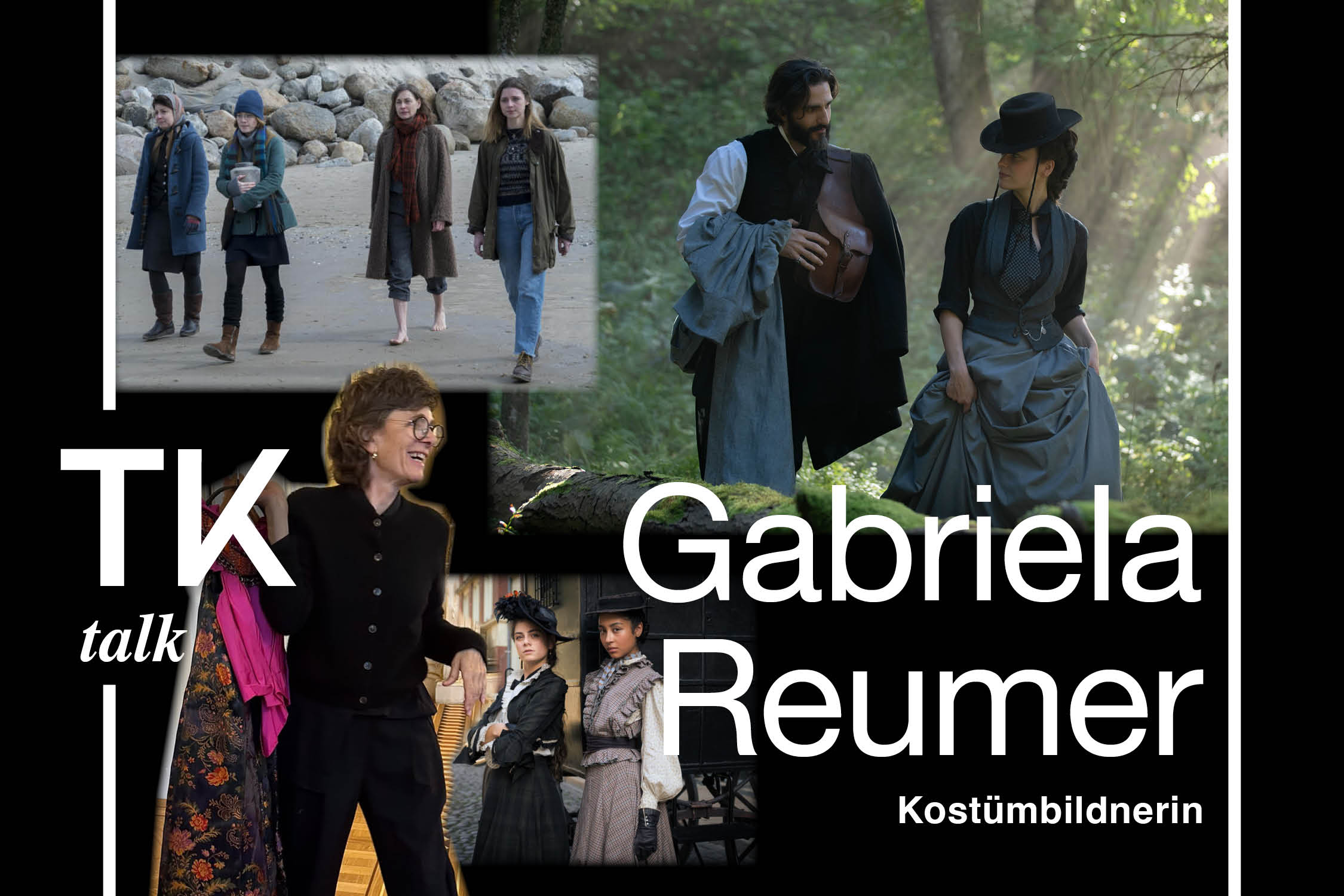
Copyright Portrait: Josephine Thiesen // “Die Kaiserin”, “Zeit der Geheimnsse”, “Dolly”: Netflix
Theaterkunst
Gabriela Reumer
You’ve been working on the costumes for the series “The Empress” since 2022. What special costume highlights can we look forward to in Season 3, and are there any differences from your previous work on the series?
Season 3 is a firework on every level. The season is so rich and intense, so much happens, and so many different storylines are woven together. The costumes are diverse and varied. As a viewer, you travel from Solferino to Vienna, from Vienna to Corfu, from Corfu to Venice, and then again from Vienna to Mexico and, in parallel, to Hungary. Each location was given its own costume language, which makes this season special and different from the previous ones. My themes for the season were opulence, decadence and loneliness. By my standards, I used a lot of glitter, gold and lace. I wanted to smother everything with it, too much of everything – right up to total decay.
In Season 3, Sisi fights both for her marriage and with her health and eventually leaves Schönbrunn to travel. How is this new phase of her life reflected in her costumes?
Elisabeth’s costumes become lighter and lighter. We often changed the shapes; the crinoline is only worn on official occasions, and in some cases we became more modern in shapes and fabrics in order to place an energy in the future. Throughout the season, we rarely put Devrim in a corset. A body with more freedom of movement helped her convey the sense of rebellion and freedom – in contrast to the other women, who were still tightly and stiffly laced.
We read that in Season 1 there were about 7 dresses per character. In Season 2, there were 36 dresses for the lead role. Did that increase even further in Season 3?
Hahahah, yes, there really was another increase in the number of costumes. We made so much, the list kept getting longer. It was great fun. I had a very talented and wonderful team at my side. We were lucky enough to find beautiful fabrics that fit the story so well that it would have been a shame not to use them… 🙂
Theaterkunst has taken over a large part of the extraordinary costumes from “The Empress”. How does it feel to know that your costumes will now live on in a costume collection and be worn by other productions?
I think it’s fantastic that Theaterkunst has taken over most of the costumes. I am endlessly grateful to Andrea Peters for this bold step. The costumes will now live on and hopefully inspire others. I consider that a great privilege.
You’re currently working on the crime series “Dolly”, set in Berlin around 1899. Can you tell us anything about the costumes yet?
We’re shooting this new Netflix series until the end of November. It’s set in Berlin in 1899, an incredibly exciting period. It allows for wonderful silhouettes and imaginative combinations without straying too far from the era. The project is fun and very challenging. I tried to give the characters something comic-like and to stylize the costume language. I’m very curious to see whether it works in the end.
How did you get into costume design, and what still fascinates you about this profession today?
I came to this profession by chance. My passion for textiles and shapes, and my love for people and their stories, opened up a path for me into the world of costume.And I still love telling stories through costume or using it to help others tell their stories.
Thank you very much for the interview and see you soon at Theaterkunst!
Thank you. And best of luck with your big step forward. I’m really looking forward to your new location.