Theaterkunst Talk
Aleksandra Staszko
We spoke to the Polish costume designer Aleksandra “Ola” Staszko about the film “Fatherland” (in cinemas from 3 September 2026) and her work as a costume designer.
Ola Staszko studied social sciences at the University of Warsaw and art at the Gerrit Rietveld Academy in Amsterdam, the Netherlands. Since then, she has designed the costumes for more than 20 films and TV series, including “Köln 75”, “Cold War”, “Ida”, “Mr Jones” and “The Crux”, which is due to be released in cinemas soon.
In 2003, she won the award for “Best Costume Design” at the Gdynia Film Festival in Poland for “Squint Your Eyes”. In 2006, she took part in the Berlinale Talent Campus. In 2013, she was nominated in the ‘Best Costume Design’ category at the Orły Polish Film Academy Awards for her costume design in the film “Ida”. Ola Staszko has been a member of the Academy of Motion Picture Arts and Sciences since 2019.
“Fatherland” (directed by Paweł Pawlikowski) premiered as the opening film of the 2026 Munich Film Festival. After the end of the Second World War, Nobel Prize-winning author Thomas Mann (Hanns Zischler) and his daughter, the actress, author and cabaret artist Erika (Sandra Hüller), embark on a journey through a Germany in ruins – from Frankfurt in the American occupation zone to Soviet-controlled Weimar. It is the first time since the war that Thomas Mann has returned to his homeland, from which he had once fled into exile. A journey into the wounded German soul, intended to bring healing – for Erika and ‘the Magician’, as his children often called Thomas Mann, it becomes a journey into the very depths of their being.
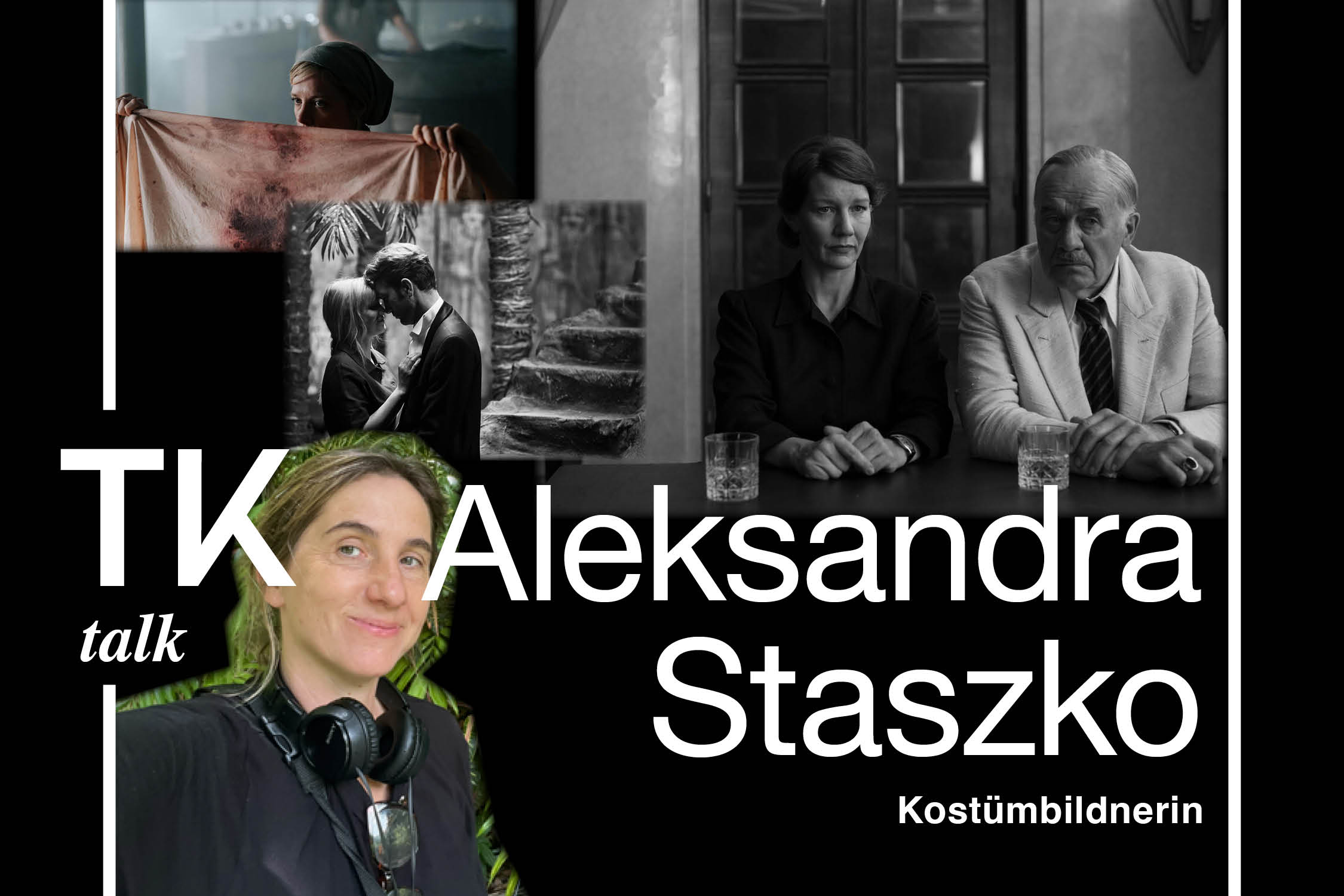
Copyright Portrait: Aleksandra Staszko // Neue Visionen / Agata Grzybowska (Fatherland) //Cala Filmproduktion (Crux) // Neue Visionen Filmverleih GmbH (Cold War)
Theaterkunst
Aleksandra Staszko
“Fatherland” is already your third project with director Paweł Pawlikowski. What fascinates you about his films, and what makes this one special?
I have been working with Paweł on his previous films, and every time feels like a new adventure. Paweł is a brilliant artist and a exceptionally talented director who generously shares his vision with his collaborators—a vision in which costume plays a vital role.
Working with Paweł gives me the opportunity to continuously develop my skills. Collaborating with the same director for the third time also brings a new level of depth. We share a history, and with each project, we build upon an established foundation of mutual understanding. Because we don’t need to explain everything from scratch, we can dive straight into the heart of the creative process.
The costumes reflect the post-war period in a devastated Germany. What did you focus on, and what role does the fact that the film is shown in black and white play?
“Fatherland” feels very different from “Cold War”. The costume language here is much more minimal. Even though “Cold War” was a black-and-white film, there was a rich palette behind the scenes – a vast array of colors, textures, fabrics, silhouettes, and looks. In “Fatherland”, by contrast, the costumes are intentionally restrained so as not to distract the audience, allowing them to focus entirely on the protagonists and their emotional journey.
One of the most captivating aspects of designing for “Fatherland” was depicting the contrast between East and West Germany – a nation split not only geographically, but also politically and culturally between Soviet and American spheres of influence. This divide naturally reflected on the wealth and everyday attire of the people.
Shooting in black and white profoundly shapes my costume choices. Without color, you rely heavily on contrast to build a visual hierarchy. The texture of the fabrics becomes paramount, creating richness, depth, and character within a monochromatic range.
For “Fatherland”, you also used historical costumes from Theaterkunst and you also hired costumes for “Köln 75” and “The Crux”. What do you appreciate about a costume collection?
When working on a period piece, I love collaborating with Theaterkunst. It has a unique atmosphere, a rich history, and has long been one of my favorite costume houses. The quality of your collection is exceptional, and working with your team is always a pleasure. I consistently discover unique pieces that end up becoming hero costumes. I sourced a beautiful selection from Theaterkunst for “Fatherland”, as well as for “Krux” (directed by Tony Vahl), premiering this month in Toronto and San Sebastián.
How did you get into costume design, and what do you love about this profession?
My path into costume design was actually quite accidental; filmmaking found me rather than the other way around. In my early twenties, many of my friends were studying at film school. One day, a friend who was a production designer invited me to assist her on a project for one of her director friends. That led to invitations on other productions, working alongside various costume designers. Little by little, I realized I had found my vocation.
What I love most about costume design is its collaborative nature. It offers a powerful medium for self-expression while helping actors discover and shape their characters. I deeply value the people I work with and the shared effort of bringing costumes to life. Filmmaking is a rare environment where diverse talents converge to tell a single story.
That synergy – collaborating closely across departments with hair and makeup designers, production designers, cinematographers, directors, and incredible actors – is what makes costume design so thrilling. I work intuitively and with a sense of lightness, embracing imperfection and the beauty of chance.
Thank you very much for the interview, and see you soon at Theaterkunst.
Thank you!


