Theaterkunst Talk
Anne-Gret Oehme
Potsdam-based costume designer Anne-Gret Oehme grew up with film: her father, Roland Oehme, was a director and screenwriter at DEFA. While studying costume design at the Dresden Academy of Fine Arts and at DEFA’s in-house training academy, she also completed an apprenticeship as a bespoke men’s tailor. After working for some time as a costume supervisor, she established herself as a costume designer after the fall of the Berlin Wall.
Her credits include “Tote sterben niemals aus”, “Die Stille nach dem Schuss”, “Du bist nicht allein”, “Warten auf’n Bus”, “Zwei zu eins” and “Der Held vom Bahnhof Friedrichstraße”. In 2022, she received the German Film Award for Best Costume Design for her work on “Lieber Thomas”.
For her two current productions, “Tania” and “Heimsuchung – Eine Jahrhundertgeschichte”, Anne-Gret Oehme once again worked with Theaterkunst.
In Volker Schlöndorff’s “Heimsuchung – Eine Jahrhundertgeschichte” (cinema release: 15 October 2026), a house on a lake in Brandenburg becomes a mirror of an entire century of German history. From the Weimar Republic through the Third Reich, the war, the GDR and reunification, the film follows the fates of its residents in their search for home and belonging.
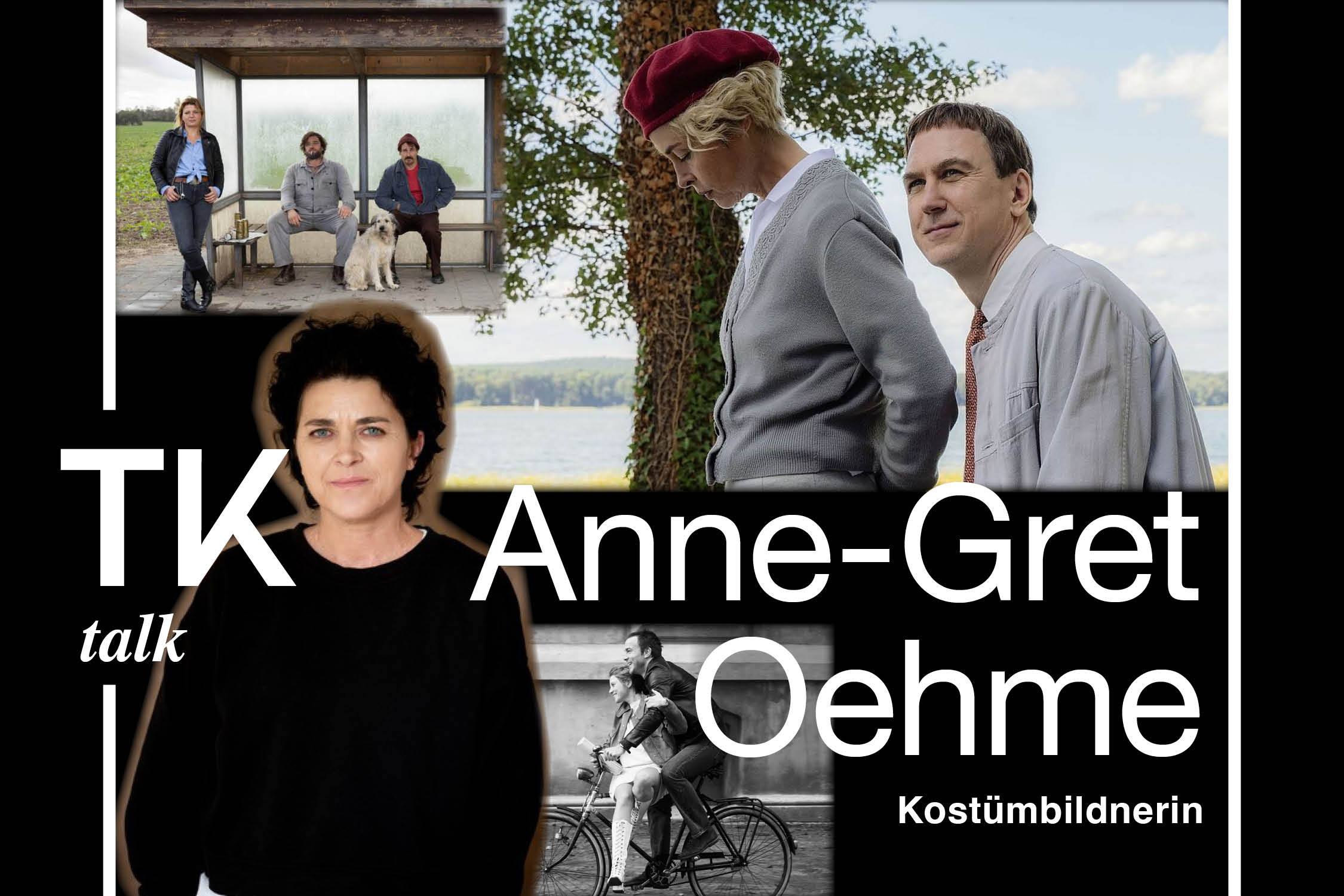
Copright Portrait: Peter Hartwig // Heimsuchung: STUDIOCANAL / Ziegler Film // Warten auf’n Bus: ARD //rnLieber Thomas: Zeitsprung Pictures / Wild Bunch Germany
Theaterkunst
Anne-Gret Oehme
With “Heimsuchung – Eine Jahrhundertgeschichte”, you developed the costume design for a film that spans several eras of the 20th century. How do you approach, as a costume designer, a story in which fashion, society and ways of life change so dramatically?
Extensive and precise research is a good foundation for any historical project. Even though I learned a great deal about costume history during my studies, when preparing a film it’s essential to immerse yourself deeply in each particular era.
Much of my work is based on historical photographs, ideally from private collections. Fashion magazines can help, but they’re not my main focus, because it isn’t fashion that determines my costume design – it’s the different characters and the way they move through space. Film is a collaboration between all departments; together we create images and characters that have to feel right. When all the elements come together, unforgettable stories emerge.
For the 1930s to the 1950s, it was harder to find meaningful material. People didn’t take as many photographs back then, and the eyewitnesses of that time are passing away. The 1960s to the 1990s were easier – I even have my own photos and memories from those years. For me, it’s essential to get a feel for an era, and films help me with that too – not only films about the period, but also films from it.
Which costume pieces kept reappearing from the time before the Second World War through to the fall of the Wall, accompanying the characters throughout the film?
The house on the lake is at the heart of the story. Naturally, people go swimming in every era. It took many hours of research to find out when which swimwear was worn by whom – and then to actually find it. Beautiful old swimming caps had lost their plasticisers and fell apart before they ever made it into the film. I was afraid I wouldn’t be able to use some particularly beautiful swimsuit treasures from your collection, because women were smaller back then. But I was lucky, and for me one of the most beautiful scenes in the film is when Susanne swims and swims and swims…
You grew up in Babelsberg and began your career at DEFA. What fascinated you about costume, and which experiences from that time are still with you today?
If you didn’t want to look like everyone else in the East, you had to be creative. So I started designing and sewing my own clothes very early on – I even made shoes. My fascination with film came from home. During the school holidays I was sometimes allowed to join my father on set, and all of my parents’ friends worked in film. And so one thing led to another.
I started at DEFA straight after finishing school. Before becoming a wardrobe assistant, I spent a few weeks in the costume store. Costume treasures were kept in partly dilapidated barracks – it was dreadful and fascinating at the same time. For each role, I strive for a timeless costume, and I like to mix costume pieces from different eras, for which a costume collection is indispensable. Making a lot out of a little, again and again, always brings new challenges, drives me and means my job is never boring.
What advice would you like to give to young costume designers?
Be open and curious. “There’s no such thing as impossible.” Small budgets demand creativity and you grow with the challenges you take on – but don’t let anyone push you around. Costume matters, because: NAKED WITHOUT COSTUME!
Thank you very much for the interview and see you soon at Theaterkunst!
Thank you!
Theaterkunst Talk
Aleksandra Staszko
We spoke to the Polish costume designer Aleksandra “Ola” Staszko about the film “Fatherland” (in cinemas from 3 September 2026) and her work as a costume designer.
Ola Staszko studied social sciences at the University of Warsaw and art at the Gerrit Rietveld Academy in Amsterdam, the Netherlands. Since then, she has designed the costumes for more than 20 films and TV series, including “Köln 75”, “Cold War”, “Ida”, “Mr Jones” and “The Crux”, which is due to be released in cinemas soon.
In 2003, she won the award for “Best Costume Design” at the Gdynia Film Festival in Poland for “Squint Your Eyes”. In 2006, she took part in the Berlinale Talent Campus. In 2013, she was nominated in the ‘Best Costume Design’ category at the Orły Polish Film Academy Awards for her costume design in the film “Ida”. Ola Staszko has been a member of the Academy of Motion Picture Arts and Sciences since 2019.
“Fatherland” (directed by Paweł Pawlikowski) premiered as the opening film of the 2026 Munich Film Festival. After the end of the Second World War, Nobel Prize-winning author Thomas Mann (Hanns Zischler) and his daughter, the actress, author and cabaret artist Erika (Sandra Hüller), embark on a journey through a Germany in ruins – from Frankfurt in the American occupation zone to Soviet-controlled Weimar. It is the first time since the war that Thomas Mann has returned to his homeland, from which he had once fled into exile. A journey into the wounded German soul, intended to bring healing – for Erika and ‘the Magician’, as his children often called Thomas Mann, it becomes a journey into the very depths of their being.
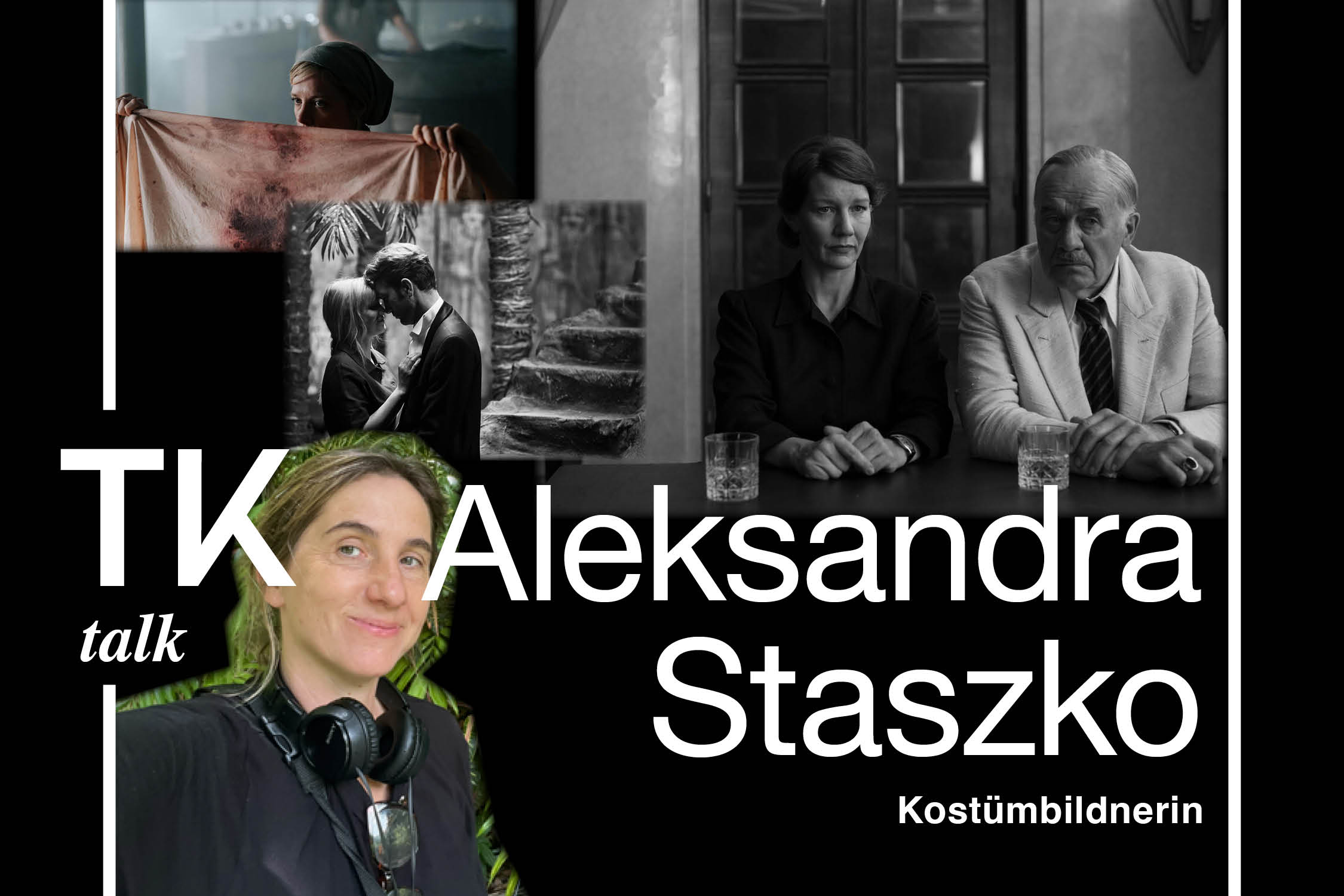
Copyright Portrait: Aleksandra Staszko // Neue Visionen / Agata Grzybowska (Fatherland) //Cala Filmproduktion (Crux) // Neue Visionen Filmverleih GmbH (Cold War)
Theaterkunst
Aleksandra Staszko
“Fatherland” is already your third project with director Paweł Pawlikowski. What fascinates you about his films, and what makes this one special?
I have been working with Paweł on his previous films, and every time feels like a new adventure. Paweł is a brilliant artist and a exceptionally talented director who generously shares his vision with his collaborators—a vision in which costume plays a vital role.
Working with Paweł gives me the opportunity to continuously develop my skills. Collaborating with the same director for the third time also brings a new level of depth. We share a history, and with each project, we build upon an established foundation of mutual understanding. Because we don’t need to explain everything from scratch, we can dive straight into the heart of the creative process.
The costumes reflect the post-war period in a devastated Germany. What did you focus on, and what role does the fact that the film is shown in black and white play?
“Fatherland” feels very different from “Cold War”. The costume language here is much more minimal. Even though “Cold War” was a black-and-white film, there was a rich palette behind the scenes – a vast array of colors, textures, fabrics, silhouettes, and looks. In “Fatherland”, by contrast, the costumes are intentionally restrained so as not to distract the audience, allowing them to focus entirely on the protagonists and their emotional journey.
One of the most captivating aspects of designing for “Fatherland” was depicting the contrast between East and West Germany – a nation split not only geographically, but also politically and culturally between Soviet and American spheres of influence. This divide naturally reflected on the wealth and everyday attire of the people.
Shooting in black and white profoundly shapes my costume choices. Without color, you rely heavily on contrast to build a visual hierarchy. The texture of the fabrics becomes paramount, creating richness, depth, and character within a monochromatic range.
For “Fatherland”, you also used historical costumes from Theaterkunst and you also hired costumes for “Köln 75” and “The Crux”. What do you appreciate about a costume collection?
When working on a period piece, I love collaborating with Theaterkunst. It has a unique atmosphere, a rich history, and has long been one of my favorite costume houses. The quality of your collection is exceptional, and working with your team is always a pleasure. I consistently discover unique pieces that end up becoming hero costumes. I sourced a beautiful selection from Theaterkunst for “Fatherland”, as well as for “Krux” (directed by Tony Vahl), premiering this month in Toronto and San Sebastián.
How did you get into costume design, and what do you love about this profession?
My path into costume design was actually quite accidental; filmmaking found me rather than the other way around. In my early twenties, many of my friends were studying at film school. One day, a friend who was a production designer invited me to assist her on a project for one of her director friends. That led to invitations on other productions, working alongside various costume designers. Little by little, I realized I had found my vocation.
What I love most about costume design is its collaborative nature. It offers a powerful medium for self-expression while helping actors discover and shape their characters. I deeply value the people I work with and the shared effort of bringing costumes to life. Filmmaking is a rare environment where diverse talents converge to tell a single story.
That synergy – collaborating closely across departments with hair and makeup designers, production designers, cinematographers, directors, and incredible actors – is what makes costume design so thrilling. I work intuitively and with a sense of lightness, embracing imperfection and the beauty of chance.
Thank you very much for the interview, and see you soon at Theaterkunst.
Thank you!
Theaterkunst Talk
Esther Walz
Esther Walz began sewing as a teenager and trained at the Academy of Jewellery Art in New York. She went on to complete a degree in costume design at Parsons School of Design in New York. Since 1980, she has been working in costume design for television films and cinema productions, as well as for theatres, focusing on historical, futuristic and contemporary themes.
Her recent productions include, for example „The Weight“, „Der perfekte Urlaub“, „Die Affäre Cum-Ex“, „Barbaren“ und „Chantal im Märchenland. In 2016, Esther Walz won the German Film Award for ‘Best Costume Design’ for „Der Staat gegen Fritz Bauer“. She had previously been nominated five times for various films.
“Virginia Woolf’s Night and Day” is based on the author’s novel of the same name, published in 1919. In London, Katherina (Haley Bennett) prefers to pursue her academic ambitions rather than rush into marriage. When she then meets the suffragist Mary (Lily Allen), she is drawn into the world of social self-determination. Her heart beats for astronomy and, suddenly, also for the progressive-minded lawyer Ralph (Elyas M’Barek).

Copright Portrait: Niko Karo // Woolf Comedy Productions Ltd. („Virginia Woolf’s Night and Day”) // Fields Entertainment / Augenschein Filmproduktion (“The Weight”) // zero one film (“Der Staat gegen Fritz besser“)
Theaterkunst
Esther Walz
With „Virginia Woolf’s Night and Day“ we are transported back to London in 1910. What makes this production and the costume design so special?
The aim of the Iranian director Tina Gahravi and myself was to portray the period around 1910 authentically, whilst avoiding the look of a dusty period piece. Bringing a touch of freshness to a historical costume drama, without adapting the costumes to our modern viewing habits and without distorting the period, is a task that should not be underestimated.
How do the costumes in the film highlight the themes of female self-determination and social change?
We join the lead actress as she enters the world of the suffragettes, whose style of dress – and, of course, their political views – stand in stark contrast to the middle-class world of London. We see how Katherine changes not only herself but also her clothing the more she breaks away from her conservative father’s world.
When adapting books for the screen, do you also take your cue from the original work and look there for inspiration for your costume design?
Of course, you read and characters take shape in your mind. Then the actual research begins, but interestingly, I usually end up with characters that have already formed intuitively in my mind.
In this case, the screenwriter had strayed somewhat from the source material, and as it is a relatively autobiographical book, I initially based my interpretation more on Virginia Woolf herself. Her delicate blouses and her earrings can be seen on our Katherine.
A batiste blouse that she wears later in the film has a small butterfly at the neckline – found at Theaterkunst, by the way – which is a subtle reference to her butterfly-like nature.
How did you get into costume design, and what do you particularly appreciate about your job?
More or less by chance, through my older sister’s friends, who lived in a shared flat with film school graduates when I was a teenager. As I did a lot of sewing, Peter F. Bringmann recognised my talent and offered me my first job as a wardrobe assistant on his debut feature film, “Theo gegen den Rest der Welt” (1980). A few years later, I met Dominik Graf and had the chance to work on a few projects with him. After being spotted by Bernd Eichinger, I landed a job as an assistant on “The Name of the Rose”. From there, I moved on to work with Wim Wenders, and that’s how it all fell into place.
I love the variety of the projects, having such a creative job, and the interesting themes that constantly require me to immerse myself in the story.
Thank you very much for the interview, and see you soon at Theaterkunst!
I would like to add that, for the most part, my team and I sourced and had the costumes made in England; however, I found some very exquisite costumes for the two female lead roles at Theaterkunst, which I simply couldn’t do without. Thank you for the interview!
Theaterkunst Talk
Sabrina Krämer
This year’s German Film Award in the category of “Best Costume Design” goes to… Sabrina Krämer for “Soun of Falling”! We offer our warmest congratulations on winning the LOLA. She was also awarded the European Film Award for “European Costume Designer” earlier this year.
Costume designer Sabrina Krämer graduated in fashion design from Burg Giebichenstein University of Art and Design in Halle and has since worked first as a costume assistant and set dresser, and subsequently as a costume designer on various film, TV series and theatre productions, such as “Fabian oder der Gang vor die Hunde”, “Er ist wieder da”, “In den Gängen”, “Tschick”, at theatres in Leipzig, Halle and Koblenz, as well as on music videos for the “Beatsteaks” and various adverts.
“Sound of Falling” tells the story of four women from different eras – Alma (1910s), Erika (1940s), Angelika (1980s) and Lenka (2020s) – whose lives are eerily intertwined. Each of them spends their childhood or youth on a four-sided farmstead, yet as they wander through their own present, traces of the past are revealed to them.
With great artistic precision and a keen sense of four distinct time periods, varied atmospheres and a host of characters, Sabrina Krämer has played a decisive role in shaping the visual world of the film, which won awards in a total of ten categories.

Copyright Portrait: Deutscher Filmpreis 2026 / Eventpress // Studio Zentral (u0022In die Sonne schauen) // Zorro Film (u0022In den Gängenu0022) // Lupa Film GmbH (u0022Fabian oder Der Gang vor die Hundeu0022)
Theaterkunst
Sabrina Krämer
Wow! The LOLA! What were your first thoughts when you heard your name announced at this year’s film awards ceremony?
At that moment, I felt above all a sense of joy and gratitude. An award like the Lola is, of course, a great personal honour, but I see it first and foremost as a recognition of a collective artistic achievement. Costume design always involves a balance of research, creativity, craftsmanship and collaboration with many other disciplines. The fact that this work is recognised and valued moved me deeply.
The costumes in “Sound of Falling” span four different decades. How did you approach this project?
In addition to the differences typical of each period, it was important to us to create visual links between the women and their respective worlds. To achieve this, we worked with recurring elements – in particular aprons, shoes and various types of headwear. These garments appear in all time periods, but vary in material, cut and function according to the era in question.
I was interested in how certain styles of clothing can endure across generations. An apron, for example, has come to symbolise different aspects of work, everyday life, caregiving or social roles over the decades, yet it remains a recognisable motif.
This gave rise to visual threads linking the four women together. The costumes were not intended to suggest that their lives are the same, but rather to show how experiences, traditions and memories are passed down through the generations. For us, these recurring elements became a kind of silent bond between the generations.
How did you get into costume design, and what are your hopes for your profession and your colleagues?
I got into costume design because I’ve always been interested in how characters can be portrayed through their appearance. Clothing is something very ordinary, yet at the same time it embodies memories, social affiliations, desires and life stories. To this day, I remain fascinated by the fact that costume design operates at the intersection of artistic creation, research, psychology and craftsmanship.
Above all, I would like to see greater visibility and recognition for the many people involved in our profession. Costume design involves not only drafting and creating designs, but also an enormous amount of craftsmanship and organisational work, much of which takes place behind the scenes. Without the expertise and dedication of our colleagues in the workshops, the costume houses, the wardrobes and on set, our work would not be possible.
Furthermore, I hope to have the time and resources needed to do a good job. Costume design can make a significant contribution to storytelling. The earlier and more closely it is integrated into the creative process, the greater its impact will be. And, of course, I hope that the next generation of costume designers will also find the right conditions to carry on this versatile and wonderful craft.
What advice would you give to those starting out in costume design?
I would advise those starting out in their careers to stay curious and gain as wide a range of experiences as possible. Costume design isn’t just about drawing; it also involves observation, research, an understanding of craftsmanship, and an interest in people. You often learn just as much in the workshop, in the wardrobe department, or whilst assisting with costumes on set as you do at the drawing board.
I also believe it is important to seek collaboration with other departments. Good costumes are rarely created in isolation, but rather through dialogue with the director, set design, make-up, cinematography and, of course, the actors. The better you understand the perspectives of others, the stronger your own work becomes.
And finally, I would encourage you to trust your own judgement. Trends come and go, but a keen eye for detail, an instinct for characters and a love of storytelling remain the most important foundations of our profession. These are skills that you develop over many years and which help you develop your own distinctive style.
Thank you very much to you and your Lola for taking the time to do this interview. See you soon at Theaterkunst!
Thank you and see you soon!
Theaterkunst Talk
Bartholomew Cariss
British costume designer Bartholomew Cariss started his career at Angels The Costumiers, learning the craft of being a costumier and gaining his knowledge of period costume. For the following years he worked in the film industry as Assistant Costume Designer learning on the job. His Assisting Credits include “The Two Faces Of January”, “The Theory of Everything” and the award winning TV Series “The Night Manager”.
His most recent productions include “Becoming Elizabeth”, “Shardlake” and “Nuremberg”, an independent feature film directed by James Vanderbilt, staring Russell Crow, Rami Malik and Micheal Shannon.
“Nuremberg” is starting in German cinemas May 7 after its premiere at TIFF – Toronto International Film Festival. This historical political thriller, based on the non-fiction book “The Nazi and the Psychiatrist”, explores the Nuremberg Trials following the Second World War.

Copyright: Prime Video (u0022The Nightmanageru0022) // LionsGate International (u0022Becoming Elizabethu0022) // Weltkino Filmverleih (u0022Nürnbergu0022)
Theaterkunst
Bartholomew Cariss
What particularly appealed to you about the ‘Nuremberg’ project, and what specific challenges did you face whilst working on this film?
I connected with the script imediatly, and I had a vision of exactly how I wanted to bring it off the page. Jamie’s script was a dramatisation of a chapter in history we know about, but also told the story we didn’t know of Douglas Kelly, and how he was effected by the time he spent with Hermann Göring and the defendents. It also had contempory relevance, in the way it was written, a sense of homour at times that suprises and was big screen feature film of the like that used be in our cinemas but of which fewer are being made these days. Yes there was challenges, there always are, but team work and collaboration gets the job done.
How did you go about the historical research for the costumes?
The trials are so well documented and there is a wealth of images, and movie footage of the to draw from. It was actually one of our vists to Theatherkunst that gave us one of the best sources of information. I was shown the book ‘DER NÜRNBERGER PROZESS’ by the costumiers, with in this book were pictures of the courtroom and the main protagonists, there was even a seating plan of the courtroom and this became a great source used by costume department and all the other departments of the production.
How did you come to work as a costume designer, and what fascinates you about this job?
I began my journey toward being a costume designer by studying fashion and theater design and had personal interest and part time job in vintage clothing while I was trying to find my way into a profession that encapsulated my studies and interests, a friend of mine told me Angels the costumiers was hiring. I was employed as a costumier and found it was the perfect environment for me. It was at Angels I furthered my knowledge of history of costume and learnt the craft of costuming, alongside a variety of costume designers that came through the doors. I went one to freelance assist and work within the industry honing my craft before designing my own projects. What’s fascinating is no two projects are the same, different storys, time periods and you work with a variety of creatives above and below the line, that being director, production designer, makeup and actors to realise a script. You learn and grow with every project.
For „Nüremberg“, you worked with Theaterkunst for the first time. What was your first impression?
You opened your door to us and were so welcoming and supportive. I was blown away by the quality of the stock and even after we had done our main pull of stock the support continued when we started filming in Budapest. Costumeing for a project requires the willingness of your costume suppliers to get behind you and help get the the job done.
We look forward to welcoming you back at Theaterkunst anytime soon!
I look forward to the next project that allows me to work alongside you. I’ve made great friends and colleagues in the Theaterkunst costume house family.
Theaterkunst Talk
NAKED WITHOUT COSTUME
The NAKED WITHOUT COSTUME initiative arose from a shared feeling among many costume designers that their artistic work often remains unseen. Despite their vital contribution to the impact of film, TV series and theatre productions, they frequently lack recognition and visibility. This exchange gave rise to an alliance that advocates for greater appreciation, better working conditions and an equal footing for costume design within the creative process. With a clearly formulated manifesto and initial public campaigns, the initiative aims to raise awareness of the importance of costume design in the long term.
We spoke to the initiators.

Copyright: Theaterkunst
Theaterkunst
NAKED WITHOUT COSTUME
How did the idea for NAKED WITHOUT COSTUME come about, and who are the people behind it?
The idea for NAKED WITHOUT COSTUME arose from a shared experience: the feeling of being invisible in one’s own artistic work. A group of like-minded costume designers – united by a passion for their craft and frustration at a lack of recognition – began to talk to one another. About productions where the costume design moves the audience but is barely mentioned. About premieres where other trades naturally take centre stage, whilst the costume designer remains in the shadows.
These conversations gave rise to an initiative. NAKED WITHOUT COSTUME brings to light what is often taken for granted: that costumes aren’t ‘just there’. That behind every piece of fabric lies an artistic decision, research and a particular perspective. The initiators see their work as a collective act: standing together for greater visibility, fair recognition and an equal place within the creative team.
You’ve written a manifesto for the costume design profession. What does it contain?
The NAKED WITHOUT COSTUME manifesto makes it clear: costume design is an artistic discipline in its own right. The entire department deserves fair working conditions, fair pay and genuine recognition. The initiative champions the visibility of costume designers and all other roles within the costume department – in credits, in the press, on juries and wherever decisions are made.
Furthermore, we call for a sustainable industry that is more diverse and inclusive, and which consistently prioritises sustainability in every respect. We call on film schools to offer dedicated courses for professional training and to establish costume departments at an early stage as integral parts of the core artistic team.
Our manifesto is a call for solidarity: for greater collaboration within the industry and a more conscious approach to our work – both within the sector and in the way it is perceived by the public.
You made your big debut at this year’s Berlinale. What other initiatives are you planning for the future?
The Berlinale was just the beginning. Our next major goal is the German Film Award. We want to make our presence felt there as NAKED WITHOUT COSTUME and send a clear message. Beyond that, we plan to bring the topic of costume design to a wider public: through panels, interventions, exhibitions and discussions. Formats that put our craft in the spotlight and spark discourse. And, of course, via our social media channels. We want to be present wherever film and television are discussed and decisions are made.
What is your greatest wish for the costume design profession?
We hope that every costume design and the work that goes into it is seen for what it is: a collaborative, creative, dramaturgical and highly complex endeavour, without which no character truly comes to life. Costume design should not be viewed merely as ‘clothing’, but as a central component of storytelling and character development, serving as a support or even the starting point for the actors’ performance, and thus an essential part of any narrative production.
We want fair working conditions for ourselves and our teams.
And along the way, NAKED WITHOUT COSTUME ideally fosters a strong, supportive network among all members of the costume department, who stand together to ensure their visibility and have fun working on joint initiatives.
Thank you very much for the interview!
Thank you very much, dear Theaterkunst team, for the interview and your support. It means a great deal to us that NAKED WITHOUT COSTUME is being given this platform and attention.
Theaterkunst Talk
Andreas Krings
Stylist Andreas Peter Krings dresses them all. Christian Friedel, Lena Urzendowsky, Valerie Pachner and this year’s Berlinale winner İlker Çatak – the stars walk the red carpets of the world in his styles.
In addition to fashion magazines such as “Die Dame”, “Interview Magazine” and “Vogue”, he was also responsible for cover shoots for 2Zeit Magazin” and “Financial Times – HTSI Magazine”. His clients include brands such as Mykita, Cartier and Chanel.
The stylist repeatedly draws on costume pieces from our collection for his stylings. Whether it’s a pair of unusual shoes, a special tie, an unusual scarf or historical jewellery. We talk to him about what makes his stylings so special and how he combines them with pieces from the collection.


Copyright: Andreas Krings (Portrait), Virgile Guinard (Christian Friedel), Ulrike Rindermann (Valerie Pachner), MYKITA (Max von Gumppenberg), Interview Magazine Shooting (Sharif Hamza)
Theaterkunst
Andreas Krings
How did you get into fashion and styling?
Basically, I’ve been passionate about fashion since I was a teenager. I used to always style my friends for nights out. Back then, it didn’t occur to me that you could actually do that for a living. So after school, I did something else for a while and studied sociology and political science. On the side, I worked at the casting agency ‘Nine Daughters And a Stereo’ in Cologne – now called ‘Tomorrow is Another Day’. We cast for designers such as Raf Simons and Hedi Slimane and booked models for shoots in magazines such as ‘Arena Homme+’ and Vogue. That’s how I learned about the profession of stylist and thought: I like that too.
Which stages of your career to date have had a particular impact on you?
Definitely my time at TIAD. Founder Eva Gödel sharpened my understanding of high fashion like no one else. Working with her, I learned how the fashion business works. But my time as an editor at Condé Nast also made me the stylist I am today. I remember Vogue shoots with Karl Lagerfeld and Peter Lindbergh. The preparations and time pressure were enormous. Developing a concept, fighting for looks you had in mind but which, of course, were on another shoot, keeping track of a record number of orders at all times. In any case, you learn to find solutions to problems in the shortest possible time that you never imagined could arise.
You often complement your styles with costume pieces from our collection. What is the idea behind this?
My inspiration for photo shoots is always influenced by films. When I’m looking for styling ideas for shoots, I often have a film character in mind and then develop that further. I take the same approach to red-carpet styling. It helps me to think in advance about exactly what makes a person unique. That’s why I always enjoy coming to Theaterkunst. In your archives, I find all these special pieces that already have a story and thus a personal touch. It is these details that I use to complete the looks.
What inspires you in your work? Do you also draw ideas for looks from our collection?
My iPhone memory is basically filled almost exclusively with photos of finds from you. My thumb gets tired from scrolling. The pieces pictured are just waiting for the right moment. The artfully laced Alaïa shoes, for example, or the red pearl-embroidered top that looks like a butterfly. Sometimes these pieces give me inspiration for a look, or they are that one detail that underlines my idea of a person.
Thank you very much for the interview, and see you next time at Fundus for more styling.
Thank you!
Theaterkunst Talk
Agata Culak
Polish costume designer Agata Culak has a long career in film and television. She graduated from a private art school in the costume and makeup department, but it was costumes that fascinated her and which she stayed with.
Agata is a two-time winner of the costume design award at the Festiwal Polskich Filmów Fabularnych and has been nominated several times for the Polish film award ‘Orły’ (Polskiej Nagrody Filmowej). Productions featuring her costume designs include “Breslau”, “Ikarus. Legenda Mietka Kosza” and “Broad Peak”.
The Polish miniseries ‘The Lead Children’ (original title: ‘Olowiane dzieci’) will premiere on Netflix February 11 2026, telling the true story of Polish doctor Jolanta Wadowska-Król (Joanna Kulig), who discovered an epidemic of lead poisoning among children living near a steel mill in the 1970s and stood up against the communist system.

Copyright Portrait: Agata Culak
Theaterkunst
Agata Culak
The series “Die Bleikinder” is set in Poland in the 1970s. How did you prepare for the project?
On my part, there were no complicated preparations. I feel very comfortable in the 1970s and I like them very much. In addition, I come from Silesia, where the entire action of this series takes place, so this topic is very close to my heart. I know what Katowice looked like in the 1970s, 1980s, and 1990s. I grew up there, very close to the mine. Of course, I had to document what steelworkers looked like at the time, so I talked to Dr. Wadowska-Król’s daughter, who shared family photos from that period with me.
To what extent do the political and social dimensions of the series influence your choice of costumes? Are there certain elements that reflect social conditions?
The social and political dimension is of great importance when choosing costumes. A steelworker going to work will look completely different from a party secretary, teacher, doctor, artist, or steel mill management. Let us also remember that in those days we did not have clothing collections that changed every quarter as we do now. Women were very resourceful and creative in repairing and making clothes, but the social and material dimensions were also very important. It was a time when clothes were worn for several years, and siblings often wore each other’s clothes. It is obvious that a doctor will look different from a steelworker’s wife.
In this story, we have two doctors who also had to be distinguished from each other. One is a professor, head of a pediatric clinic, who travels to symposia abroad and has access to clothes from abroad and the financial means to buy in Pewex stores (at that time in Poland, there was a chain of stores where you could buy Western products for dollars). The other is a doctor from a local clinic, whose material status is much lower. This also needs to be shown through the costumes. In this story, it was necessary to create a world of hard-working steelworkers and their families, especially children, a world of party power that tries to conceal uncomfortable facts, and a warrior who decides not to be indifferent to the harm done to children and does not give up in her fight against the authorities.
You have visited us several times at Theaterkunst. What do you particularly like about our collection?
I really like costume magazines, especially when everything is sorted by decade, which makes my work much easier. In addition, you have very friendly staff who are helpful and really knowledgeable about costumes. I like coming back to you, I always find something new and inspiring, you have a completely different quality of costumes, and I love your patinated costume section.
How did you get into costume design and what excites you about your job?
I’ve been very lucky, as I’m the only one from my graduating year who works in films and TV series. I have always been fascinated by the creation of visual worlds, by what happens in your brain when you read letters and your imagination begins to construct a street, cars, a sidewalk, trees, bushes, passersby, and, for example, two characters having a conversation. What they are wearing, what kind of people they are, what they do, what accessories they have, how they gesticulate. It’s an amazing process. Very often, when I see a costume, shirt, dress, jacket or blazer that I like, I build a character for it. This is how I have built up a fairly large collection of costumes that I have bought or been given, which often wait years for me to use them.
The amazing thing about this profession is that every project is different, requires different preparation, tells a different story, you are constantly developing and learning something new, you visit places that are often inaccessible to most people. I just love what I do.
Dziękuję bardzo for the interview, best regards to Poland, and see you at Theaterkunst!
Thank you very much and see you soon.
Theaterkunst Talk
Judith Holste
We talk to costume designer Judith Holste about her work on the fourth season of “Ku’damm” and 1970s fashion. After completing an apprenticeship as a dressmaker and a semester-long course in pattern cutting, she studied costume design at HAW Hamburg in Armgartstraße. While still a student, she gained work experience in the costume department at the theater in Düsseldorf and worked as an assistant at the Burgtheater in Vienna with George Tabori and Andrea Breth.
Judith Holste’s work is known from “Der Fall Marianne Voss” , “Die Unschärferelation der Liebe”, “Wir wollten aufs Meer”, “Erzgebirgskrimi”, and “Wolffs Revier”, among others. She moved to Berlin in 1994 for the latter series and has remained loyal to the city to this day.
Ku’damm 77 will premiere on December 27, 2025, in the ZDF media library and on January 12, 13, and 14, 2026, on TV. Following the great success of the first three seasons centered around the Schöllack family, the family story now continues at the Galant dance school on Kurfürstendamm. Things are turbulent in the apartment above the dance school, where three generations live together: sisters Monika (Sonja Gerhardt) and Helga (Maria Ehrich), their almost adult daughters Dorli (Carlotta Bähre) and Friederike (Marie Louise Albertine Becker), and mother and grandmother Caterina (Claudia Michelsen). Only Eva (Emilia Schüle), the third sister, is still “abroad,” as her prison stay is euphemistically described, but her release is approaching.

Copyright: ZDF/Conny Klein (u0022Ku’damm 77), X Verleih (u0022Die Unschärferelation der Liebeu0022), Wildbunch (u0022Wir wollten aufs Meeru0022) // Portrait: privat
Theaterkunst
Judith Holste
What were your first thoughts when you were asked to work for the fourth season of “Ku’damm”? Were you attracted by the theme of the 70s? In terms of fashion, the previous seasons dealt with the 50s and 60s.
I was absolutely thrilled when I got the go-ahead for the project and went to the Kant cinema that very same day, because they were showing the 1977 film “Saturday Night Fever” starring John Travolta. That really got me in the mood for the topic.
What research did you do on 1970s fashion? Can you name a particularly influential source?
First, I looked through my own photos, because the 70s were my time. I even went to dance school myself in 1977. What a nice coincidence. To refresh my memory, I looked at my own class photos from that time. I also found a lot of inspiration in old Burda magazines, which you also have well sorted and ready to hand at Theaterkunst. The same goes for Bravo and Stern magazines. In addition to these many static images, I also needed moving images for my research. RBB has a great documentary about Berlin in 1977. I watched it several times to get a feel for Berlin at that time. I also drew inspiration from “Drei Damen vom Grill” and the legendary Tatort episode “Reifezeugnis” starring Nastassja Kinski.
How did you approach the fashion of 1977 without falling into stereotypes?
During my research, I quickly realized that the end of the 70s was no longer as bright and colorful, but rather more subdued in terms of color. Nevertheless, you can play with the entire spectrum of the 70s, because this allows you to reveal a lot about a character, e.g., whether the person is very fashionable or tends to cling to the old ways.
We were able to portray the different groups in the series very well through fashion. The guests at the dance school were dressed very differently from the club or pub goers, for example. It always depends on who the characters are and what they express. I wanted to show the different trends that existed at that time. In Berlin at the end of the 1970s, for example, there were a few punks on the streets, so we made sure they were visible in the cityscape.
I used a lot of original costumes from Theaterkunst, especially the SWR plays in Naumannpark. This collection of 1970s costumes was extremely important for the production. I was thrilled when, on the very first day of my preparation period, I found the great plaid ensemble at your place, which Eva ultimately wears for her big appearance in the series.
It was a big challenge to estimate the right sizes, because the sizes back then are completely different from today’s sizes. My team and I measured everything or simply tried things on ourselves.
We only made Dorli’s jumpsuit because we needed several of them for the dance doubles. We also made a competition dress, which we needed two of. Otherwise, we used original pieces from the period. There were plenty of those, because every time you go through the costume collection, you find new things.
How do the looks of the three generations differ, and how do the costumes reflect the personalities and changes of the characters (grandmother Caterina, her daughters, their daughters)?
I rewatched all the episodes and seasons to understand how everyone relates to each other and what happened in the past.
Caterina is designed to be less fashionable and more retro, with her own unique style. This meant that she could wear anything, such as an orange jersey suit from the early 70s. It was a very lived-in look.
The costumes were an excellent way to support each character and their development. From Eva in prison and her prison attire to her fantastic costume after her release—there’s a whole story to tell there. Monika, who trains her daughter Dorli, is more practical and usually wears pants, so I picked up on that.
Or Helga, who breaks free from her existence as a wallflower after meeting this new man. These are wonderful developments.
The actors were very open to our costume suggestions and accepted everything. The costume must not be too dominant. The focus must always remain on the role, because the costume supports the character.
How did you get into costume design and what excites you about your job?
I got into costume design through my tailoring education and internships at the theater. I quickly realized that I was more interested in costumes and working with people than in fashion itself.
I love that every production brings a fresh theme and that you always have to adapt to the people involved. I find the appeal of creating new characters for each production fascinating. When reading the script, I always get initial ideas about what a character might look like and whether there might be a special feature that could be highlighted with a costume detail. No one is perfectly dressed, and that’s how it should be in the film when you create a character. My team and I always remain open to what the actor has in mind.
At Ku’damm in the 70s, the change in actors was very noticeable: they often arrived in fleece jackets and sweatpants and left for the set in tight bell-bottoms, plaid shirts, and colorful glasses.
What advice would you give to young people who would like to work in costume design?
Above all, you should enjoy your job and find it fulfilling. Patience and diplomacy are very important, because the ideas of different people (costume designers, actors, directors, etc.) need to fit together. You have to be prepared for many different opinions to clash and for your ideas to remain flexible.
A certain degree of composure is also helpful. You should stick to your ideas, but not be rigid about them; instead, always remain open to other influences. Nevertheless, you can and must trust that your own ideas are a good foundation.
Thank you very much for the interview, and see you soon at Theaterkunst!
See you soon!